About the HPV vaccine
Find out more about the HPV vaccine
What protection does the HPV vaccine give?
The HPV vaccine is the best way for someone to protect themselves against an infection with HPV.
It gives 98% protection against the 9 main types of HPV that cause genital warts and cancers caused by HPV.

Studies from around the world show that the number of people getting cervical abnormalities and cervical cancer has decreased since the vaccine was introduced.
In this video, parents/carers and healthcare professionals talk about the protection offered by the HPV vaccine.
What is in the HPV vaccine?
The HPV vaccine contains proteins that look like the outside of the HPV virus.
These proteins help the body make a strong immune response to protect somebody from the virus.
- The vaccine does NOT contain HPV virus or its genetic material. It cannot give anyone HPV or cancer.
- The vaccine does NOT contain any gelatine, pork (porcine), or egg products.
For more information about ingredients of the HPV vaccine, please see this Patient Information Leaflet.
What are the side effects?
Like with any medicine, some people may have mild side effects after the HPV vaccine.
Side effects are normal and show that someone’s body is building protection against HPV.
The most common side effects are:
- A sore arm where the needle went in
- Redness or swelling at the injection site
- An achy arm for the rest of the day
Not everybody will get all of these side effects.
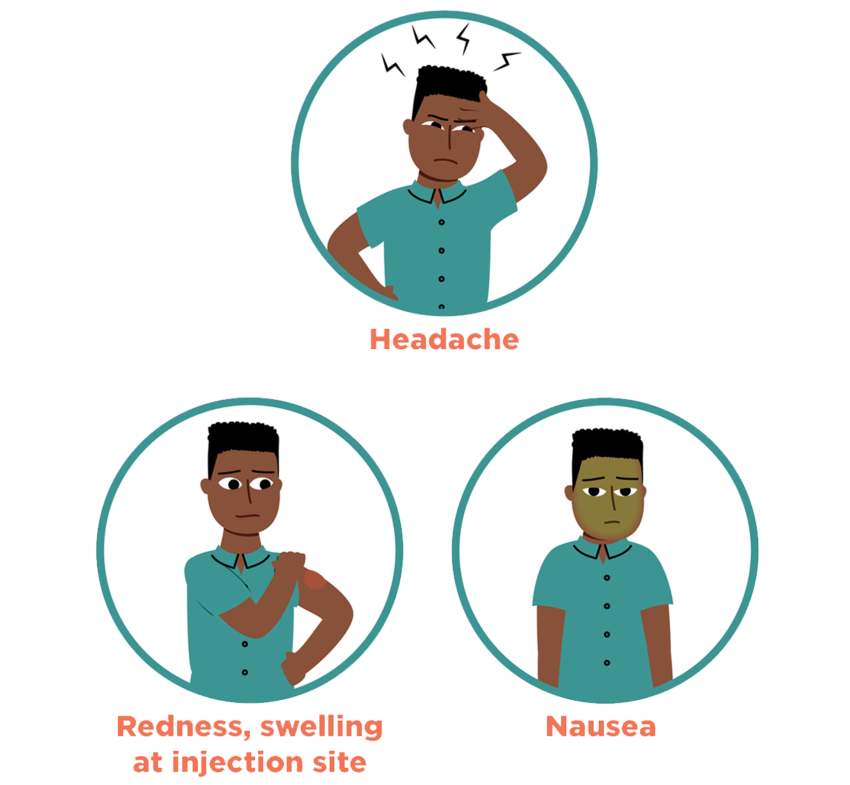
Less common side effects (affect about 1 in 10 people):
- Feeling sick or nauseous
- Vomiting
- Feeling hot or shivery (fever)
These may be annoying, but they usually go away in a day or two.
Remember, the HPV vaccine offers protection against much more serious health problems.
In this video, parents/carers ask healthcare professionals about the safety and side effects of the HPV vaccine.
Very rarely, someone may have a serious allergic reaction (called anaphylaxis). This only happens in about 1 in a million people. This is the same chance as being struck by lightning.
This reaction happens only if someone is allergic to something in the vaccine (e.g. yeast). It usually happens within minutes of getting the vaccine.
All healthcare professionals involved in giving vaccines are fully trained. They have medicine ready to treat it quickly.
For more detailed information about side effects, please see this Patient Information Leaflet.
How many injections does someone need?
For most people just one injection of the HPV vaccine gives excellent protection against cancers caused by HPV.
There is no sign that this protection gets weaker over time. More research is happening to find out exactly how long the protection lasts. It is expected to be for life.
If someone comes into contact with HPV more than once, their body will know how to fight it off because of the vaccine.